Musabguide

How to Start a Low-Budget Side Hustle (Even If You’re Starting From Zero)

How to Start a Low-Budget Side Hustle (Even If You're Starting From Zero)

Most people think starting a side hustle requires savings, connections, or some rare skill they don’t have. They’re wrong. The side hustles generating real, consistent income for everyday people right now — the ones quietly paying off debt, funding vacations, and replacing nine-to-five jobs — most of them started with under $50 and a few spare hours a week. You don’t need a business plan. You don’t need a logo. You don’t even need a website on day one. What you need is a starting point — and that’s exactly what this guide gives you. By the time you finish reading, you’ll know which low-budget side hustle fits your actual life, how to validate it before wasting time, and the exact steps to take in your first week. Why Most Beginners Never Start (And How to Avoid That Trap) Here’s the brutal reality: the biggest thing standing between most beginners and their first dollar online isn’t money. It’s decision paralysis. They spend weeks researching options, comparing platforms, watching YouTube tutorials — and never actually start. Meanwhile, someone else with half the information just launched. The fix is simple. Pick one model. Start cheap. Adjust as you go. That’s the entire philosophy behind every successful low-budget side hustle. Not perfection — momentum. What Makes a Side Hustle “Low-Budget” and Worth Your Time Not every side hustle is created equal. Some sound cheap but quietly drain your time, energy, and money through hidden costs. A genuinely low-budget side hustle meets three criteria: With those filters applied, here are the models that consistently work for beginners. The 5 Best Low-Budget Side Hustles for Beginners 1. Freelance Services: The Fastest Way to Earn Your First Dollar Freelancing is the single fastest path from zero to paid for most beginners. You’re selling a skill directly to someone who needs it — no middleman, no inventory, no waiting months for SEO to kick in. Skills that are in high demand right now: You don’t need to be the best in the world at any of these. You need to be good enough to solve a specific problem for a specific person. How to start with almost no money: Realistic startup cost: $0–$15 (optional tools like Canva Pro or Grammarly) Realistic first income timeline: 2–4 weeks with consistent outreach 2. Selling Digital Products: Create Once, Earn Repeatedly Digital products are files — eBooks, templates, printables, Canva packs, spreadsheets, Notion dashboards — that you create once and sell an unlimited number of times. The profit margins are extraordinary. A $15 Notion productivity template costs nothing to produce beyond your time, and every sale after the first is essentially pure profit. What sells well for beginners: Where to sell them without a website: Realistic startup cost: $0–$20 (Etsy charges a small listing fee per product) Realistic first income timeline: 4–8 weeks, depending on niche research and product quality 3. Affiliate Marketing Through a Blog or Social Media Affiliate marketing means you recommend products and earn a commission every time someone buys through your unique link. No product creation. No customer service. No inventory. The catch — and it’s an honest one — is that this takes time. You won’t earn a meaningful income in your first month. But a single well-ranked blog post or pinned social post can generate commissions for years without any additional effort. Best starting points for beginners: The cheapest way to start: You don’t need a full website immediately. Start with a free Pinterest account or a niche-specific blog on WordPress.com and create content that answers questions your target audience is already Googling. For example, a post titled “Best Budget Planners for Students 2025” with Amazon affiliate links costs $0 to publish and can generate passive clicks for months. Realistic startup cost: $0 (free platforms) to $15/month (basic blog hosting) Realistic first income timeline: 3–6 months for consistent traffic and commissions 4. Print-on-Demand: Sell Physical Products Without Touching Inventory Print-on-demand lets you design products — t-shirts, mugs, tote bags, phone cases — and sell them online. When someone orders, a third-party company prints and ships the product directly to the customer. You never handle stock or shipping. Best platforms for beginners: What sells consistently: The key is specificity. A generic motivational t-shirt competes with millions of other generic t-shirts. A t-shirt that says something only pediatric nurses would immediately understand? That targets a loyal, passionate niche. Realistic startup cost: $0–$30 (Etsy listing fees, optional premium design tools) Realistic first income timeline: 6–10 weeks with consistent product uploads and niche research 5. Content Creation (YouTube or Blogging): The Slowest Start, the Highest Ceiling YouTube and blogging are not fast. They will not replace your income in 60 days. Anyone telling you otherwise is either lying or an outlier. What they offer is something the other models don’t: compounding returns. A blog post published today can generate traffic and affiliate income three years from now. A YouTube video posted this month can earn ad revenue every single day for years. Why beginners underestimate this model: Most people quit between months 3 and 5 — right when results are about to start appearing. The ones who stay consistent past that point almost always see meaningful growth by month 8–12. Low-cost way to start a blog: Low-cost way to start on YouTube: Realistic startup cost: $15–$50 for blogging; $0–$25 for YouTube Realistic first income timeline: 6–12 months for meaningful, consistent earnings How to Validate Your Side Hustle Idea Before Wasting Time on It Before you invest a single hour building anything, spend 30 minutes answering these three questions: 1. Are people already searching for this? Go to Google and type your idea. Look at the autocomplete suggestions and the “People Also Ask” section. Both reveal real demand in real words. No search interest = no audience. 2. Is anyone already making money from it? Existing competition is a green flag, not a warning sign. Check Etsy for digital product ideas, Fiverr for freelance services, and Amazon for book/guide … Read more

30 High Paying Affiliate Programs to Make Money for Beginners (2026 Guide)

30 High Paying Affiliate Programs to Make Money for Beginners (2026 Guide)

If you’re searching for affiliate programs to make money for beginners, you’re in the right place. This in‑depth guide lists 30 high-paying affiliate programs that are beginner‑friendly, easy to join, and offer great earning potential — even if you’re just starting out. Whether you run a blog, YouTube channel, TikTok page, or Pinterest account, these programs can help you earn passive income with simple promotions. Let’s dive in. What Are Affiliate Programs? Affiliate programs allow you to earn commissions by promoting a company’s products or services. When someone clicks your link and buys (or signs up), you get paid. For beginners, the best affiliate programs are: This list includes SaaS, finance, hosting, AI tools, education, health, and e-commerce programs — all proven to pay well. 30 High-Paying Affiliate Programs to Make Money for Beginners Below are the top programs categorized for easy navigation. 🟦 1. SaaS & Online Tools (High Recurring Commissions) These programs offer recurring monthly commissions, making them perfect for long‑term passive income. 1. HubSpot Affiliate Program Commission: Up to $1,000 per referralCookie: 90 daysWhy it’s great: High-ticket SaaS with excellent conversion rates. 2. ClickFunnels Commission: 30–40% recurringCookie: 30 daysWhy beginners love it: Huge community, tons of training, high payouts. 3. Jasper AI Commission: 30% recurringCookie: 30 daysWhy it’s high-paying: AI tools convert extremely well in 2026. 4. Surfer SEO Commission: 25% recurringCookie: 60 daysBest for: Bloggers, SEO beginners, and content creators. 5. Grammarly Commission: $20–$100 per premium signupCookie: 90 daysWhy it’s beginner-friendly: Easy to promote to students and writers. 6. Canva Commission: Up to $36 per saleCookie: 30 daysWhy it’s great: Canva is extremely popular and easy to promote. 7. TubeBuddy Commission: 30% recurringCookie: 30 daysBest for: YouTubers and video creators. 8. Teachable Commission: 30% recurringCookie: 90 daysWhy it pays well: Online courses are booming. 9. ConvertKit Commission: 30% recurringCookie: 30 daysPerfect for: Bloggers and email marketers. 10. SEMrush Commission: $200 per saleCookie: 10 yearsWhy it’s high paying: One of the highest commissions in SEO tools. 🟩 2. Web Hosting & Website Builders (High Ticket Commissions) Hosting companies pay some of the highest affiliate commissions online. 11. Bluehost Commission: $65–$130 per saleCookie: 90 daysWhy beginners love it: Easy approval and high conversions. 12. Hostinger Commission: Up to 60% per saleCookie: 30 daysWhy it’s great: Affordable hosting = easy to promote. 13. Kinsta Commission: $50–$500 + 10% recurringCookie: 60 daysWhy it’s high paying: Premium hosting with high-ticket plans. 14. SiteGround Commission: $50–$150 per saleCookie: 30 daysWhy it converts: Strong reputation and fast hosting. 15. Shopify Affiliate Program Commission: Up to $2,000 per referralCookie: 30 daysWhy it’s powerful: E-commerce is exploding in 2026. 🟧 3. Finance & Investment Affiliate Programs (Very High Payouts) Finance programs often pay $50–$500+ per lead. 16. Webull Commission: $5–$300 per signupCookie: 30 daysWhy it’s beginner-friendly: Pays even for free signups. 17. Robinhood Commission: $5–$50 per signupCookie: 30 daysWhy it’s easy: Free stock promotions convert well. 18. Personal Capital Commission: $100–$150 per qualified leadCookie: 30 daysWhy it’s high paying: Finance leads are extremely valuable. 19. Acorns Commission: $10–$20 per signupCookie: 30 daysPerfect for: Beginners promoting budgeting or saving content. 20. Credit Karma Commission: $2–$50 per leadCookie: 30 daysWhy it’s easy: Free credit score checks convert fast. 🟪 4. Ecommerce & Physical Product Affiliate Programs These programs are great for beginners who want to promote everyday products. 21. Amazon Associates Commission: 1–10%Cookie: 24 hoursWhy beginners love it: Millions of products to promote. 22. Etsy Affiliate Program Commission: 4–8%Cookie: 30 daysBest for: Handmade, digital products, and gift guides. 23. Walmart Affiliate Program Commission: 1–4%Cookie: 3 daysWhy it’s useful: Huge product selection. 24. Target Affiliate Program Commission: 1–8%Cookie: 7 daysWhy it’s beginner-friendly: Strong brand trust. 25. Best Buy Affiliate Program Commission: 1–6%Cookie: 24 hoursPerfect for: Tech and electronics content. 🟫 5. Education, Courses & Online Learning Affiliate Programs Online learning is booming, and these programs pay well. 26. Coursera Commission: 10–45%Cookie: 30 daysWhy it’s great: High-ticket professional courses. 27. Udemy Commission: Up to 15%Cookie: 7 daysWhy it converts: Millions of affordable courses. 28. Skillshare Commission: $7 per signupCookie: 30 daysWhy beginners love it: Pays for free trials. 29. MasterClass Commission: 25%Cookie: 30 daysWhy it’s high paying: Premium celebrity-led courses. 30. Fiverr Affiliate Program Commission: $15–$150 per saleCookie: 30 daysWhy it’s powerful: Fiverr services are easy to promote. How to Choose the Best Affiliate Programs as a Beginner Choosing the right affiliate programs can make or break your earnings. Here’s what to look for: ✔️ 1. High Commission Rates Aim for programs that pay 20%+ recurring or $50+ per sale. ✔️ 2. Long Cookie Duration Longer cookies = more chances to earn. ✔️ 3. Beginner-Friendly Approval Some networks require experience — choose easy-approval programs first. ✔️ 4. Strong Brand Reputation Trusted brands convert better. ✔️ 5. Products You Understand Promote tools you can explain easily. How to Promote Affiliate Programs as a Beginner Here are the easiest ways to start earning: 🟦 1. Start a Blog Write SEO articles targeting keywords like: Blogs convert extremely well. 🟩 2. Use YouTube Create simple videos: You don’t need to show your face. 🟧 3. Pinterest Marketing Pin designs linking to your blog or affiliate landing pages. 🟪 4. TikTok & Instagram Reels Short videos convert fast in 2026. 🟫 5. Email Marketing Build a list and promote tools you trust. How Much Can Beginners Earn with Affiliate Marketing? Your earnings depend on: Typical beginner earnings: Affiliate marketing grows over time — the more content you publish, the more you earn. Final Thoughts These 30 high paying affiliate programs to make money for beginners are perfect for anyone starting their online income journey. Whether you prefer SaaS tools, hosting, finance apps, or ecommerce, there’s a program here that can help you earn consistent passive income. Choose 3–5 programs, create helpful content, and stay consistent — that’s the real secret to affiliate success. FAQ: Affiliate Programs to Make Money for Beginners 1. What are the easiest affiliate programs for beginners? Amazon Associates, Canva, Fiverr, and Hostinger are the easiest to join and … Read more

8 Free Platforms That Pay You to Create Content in 2026

8 Free Platforms That Pay You to Create Content in 2026

You don’t need a million YouTube subscribers. You don’t need a verified Instagram account. You don’t even need a professional camera or a studio setup. In 2026, there are free platforms that genuinely pay content creators, and many of them will start sharing revenue with you from your very first piece of content, long before you’ve built any kind of following. This guide breaks down 8 of those platforms. For each one, you’ll see exactly what kind of content performs best, what the payment structure looks like, and whether it’s genuinely beginner-accessible or just pretending to be. No hype. Just real platforms, real payment models, and honest assessments of what it actually takes to earn on each one Why Most People Miss These Platforms The creator economy gets talked about constantly in terms of YouTube and Instagram. But those platforms are genuinely hard to monetize as a beginner. YouTube requires 1,000 subscribers and 4,000 watch hours before you see a cent. Instagram has no direct creator payment at all. Meanwhile, smaller and newer platforms are actively trying to attract creators. They need content to grow. So they pay for it, sometimes immediately, sometimes with very low thresholds, and sometimes with no follower requirement whatsoever. If you’ve been waiting until you’re “big enough” to start earning from content, these platforms eliminate that excuse. 1. Medium Partner Program Best for: Writers and bloggers Payment model: Reader engagement earnings (time spent reading your content) Minimum payout: $10 Follower requirement: None Signup cost: Free to write, $5/month to join the Partner Program as a reader Medium pays writers based on how much time paying Medium members spend reading their articles. You don’t need followers to start. If your article gets curated by Medium’s editorial team and distributed across the platform, it can earn from day one. What Works Best on Medium Personal experience stories with practical takeaways How-to guides with specific actionable steps Opinion pieces on trending topics in business, technology, and self-improvement Realistic Earnings Beginners with strong writing typically earn $5 to $50 per article in the first few months. Top Medium writers earn $1,000 to $5,000+ per month. The gap is skill, consistency, and understanding what Medium’s algorithm rewards. Tip Submit your articles to relevant Medium publications for dramatically higher distribution and earnings. 2. Substack Best for: Writers who want a newsletter audience. Payment model: Subscription revenue (readers pay monthly/yearly for your content.) Minimum payout: $0.50 Follower requirement: None. Sign-up cost: Completely free. Substack takes 10% of paid subscriptions. Substack lets you send email newsletters and charge subscribers a monthly fee for premium content. The free tier lets you build an audience without any upfront cost, and you can add paid subscriptions whenever you’re ready. What Works Best on Substack Niche newsletters (specific topics for specific audiences) Behind-the-scenes or exclusive insights in your area of knowledge Weekly roundups with personal commentary Realistic Earnings Even a small paid list of 100 subscribers at $7/month generates $700/month. The key is building trust with free content first, then converting a percentage of readers to paid subscribers. Tip Substack’s internal discovery feature actively promotes growing newsletters to new readers, a genuine built-in growth mechanism most people don’t use. 3. YouTube (with Shorts Monetization) Best for: Video creators who can produce short-form content. Payment model: Ad revenue share + Shorts bonus fund. Minimum payout: $100 via AdSense Follower requirement: 500 subscribers + 3,000 watch hours for standard monetization Yes, standard YouTube monetization has thresholds. But YouTube Shorts now offers a separate monetization path that many beginners reach significantly faster than the standard requirements. What Works Best as a Beginner Shorts under 60 seconds on specific how-to topics Reaction or commentary content in a specific niche Educational “did you know” style content Realistic Earnings YouTube Shorts creators earn between $0.03 and $0.07 per 1,000 views on average. At 100,000 views, that’s $3 to $7. It sounds small, but viral Shorts happen quickly and stack. Tip Use YouTube as a long-term play. The channel you build now keeps earning for years. 4. TikTok Creator Rewards Program Best for: Short-form video creators Payment model: Per-view earnings based on engagement Minimum payout: $50 Follower requirement: 10,000 followers + 100,000 views in the last 30 days TikTok’s Creator Rewards Program pays significantly more than the old Creator Fund. The follower requirement means it’s not instant, but 10,000 TikTok followers is far more achievable than it sounds with consistent posting. What Works Best on TikTok Educational content under 60 seconds Day-in-the-life or behind-the-scenes content Trending audio with original commentary Realistic Earnings Creators with 50,000 to 100,000 followers typically earn $200 to $1,000 per month from the Creator Rewards Program alone, before brand deals or affiliate income. Tip Post 3 to 5 times a week minimum. Consistency matters more than production quality on TikTok. 5. Vocal Media Best for: Writers across all niches Payment model: Pay-per-read (earnings per 1,000 reads) Minimum payout: $35 Follower requirement: None Sign-up cost: Free Vocal Media pays writers per read, meaning every person who reads your article earns you money. What Works Best on Vocal Top 10 lists and listicle-style articles True crime and mystery stories Personal experience essays Food and travel content Realistic Earnings Vocal is best treated as a supplemental income source rather than a primary one. Writers who publish consistently across multiple niches can earn $50 to $200 per month without a massive audience. Tip Vocal runs regular writing challenges with cash prizes. Entering these competitions is one of the fastest ways to earn above the per-read rate. 6. Newsbreak Best for: Local news and community writers Payment model: Advertising revenue share per article Minimum payout: $100 Follower requirement: None Sign-up cost: Free Newsbreak is a local news platform that pays writers to cover community topics such as local events, neighborhood news, and regional stories. What Works Best on Newsbreak Local event coverage Community interest stories Regional news commentary City-specific guides and recommendations Realistic Earnings Newsbreak reporters typically earn $50 to $500 per month depending … Read more

How to Earn Money with Canva and ChatGPT?

How to Earn Money with Canva and ChatGPT

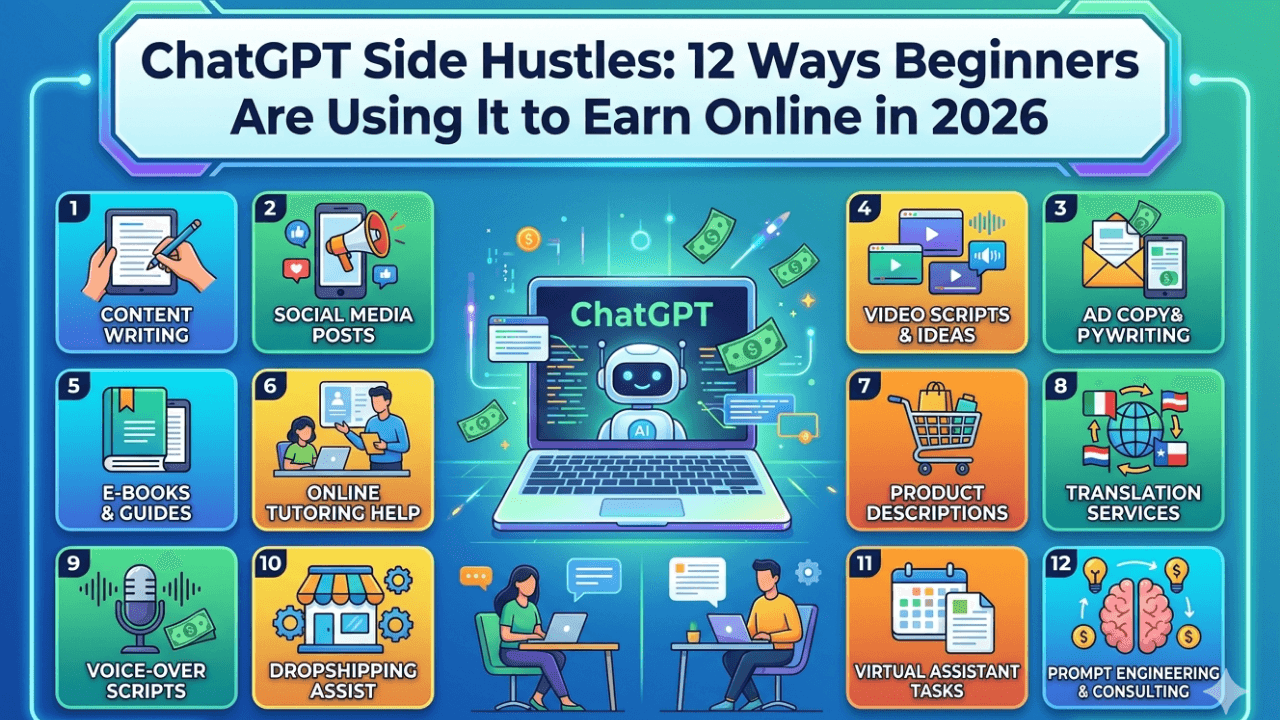
You can earn money with Canva and ChatGPT by creating and selling digital products, offering freelance services, designing templates, running print-on-demand stores, starting a blog, or launching online courses. Canva handles professional design, while ChatGPT generates high-quality content, making it easy for beginners to build online income streams with low startup costs. If you’re looking for a beginner-friendly way to start making money online, combining Canva and ChatGPT is one of the smartest strategies in 2026. These powerful tools allow you to create valuable content, professional designs, and digital products without advanced technical skills or expensive software. If you’re looking for a simple and affordable way to start making money online, learning how to earn money with Canva and ChatGPT can be a game changer. These two powerful tools allow beginners and professionals to create digital products, offer services, and build online income streams without needing advanced technical skills. In this guide, you’ll discover practical, beginner-friendly strategies you can start today. Whether you want a side hustle or full-time online income, Canva and ChatGPT can help you get there. Why Canva and ChatGPT Are Perfect for Online Income Before diving into strategies, let’s understand why this combination works so well. Canva: Easy Design for Everyone Canva is a drag-and-drop design platform that lets you create: No graphic design degree required. ChatGPT: AI-Powered Content Creation ChatGPT helps you: When you combine Canva’s design tools with ChatGPT’s writing ability, you can create and sell high-value digital products or services quickly. 1. Sell Digital Products One of the most popular ways to earn money with Canva and ChatGPT is by selling digital products. Step 1: Use ChatGPT to Create Content Ask ChatGPT to generate: Example: “Create a 30-day fitness planner” or “Write a beginner’s budgeting guide.” Step 2: Design in Canva Import the text into Canva and: Step 3: Sell on Platforms You can sell your product on: Digital products are powerful because you create once and sell unlimited times — true passive income potential. 2. Offer Freelance Services Freelancing is another excellent way to earn money quickly. Services You Can Offer Social Media Content Creation Use ChatGPT to write captions and Canva to design posts.Offer monthly packages to small businesses. Blog Graphics & Pinterest Pins Bloggers need visuals. Create: Resume & CV Design Use ChatGPT to optimize resumes and Canva to design professional layouts. You can find clients on: Freelancing allows you to start earning immediately without building your own platform. 3. Start a Print-on-Demand Business Print-on-demand (POD) is a low-risk online business model. How It Works You don’t handle inventory or shipping. When someone buys, the platform prints and ships the product. This is a beginner-friendly way to earn money with Canva and ChatGPT without upfront inventory costs. 4. Create and Monetize a Blog If you already have a website (like many online entrepreneurs do), you can use Canva and ChatGPT to grow traffic and income. Step 1: Write SEO Blog Posts Use ChatGPT to: Step 2: Design Engaging Images Create: Step 3: Monetize Your Blog You can earn through: Consistent blogging can turn into long-term passive income when optimized for SEO. 5. Sell Templates Templates are highly profitable because they save people time. Popular Template Ideas Use ChatGPT to research trending niches and create template descriptions.Design the template in Canva and sell the editable link. People love “done-for-you” solutions — and templates deliver exactly that. 6. Create Online Courses or Mini Guides You can package your knowledge into a course. How to Build a Course Sell your course on: Online education is growing rapidly, making this a smart long-term income strategy. 7. YouTube Automation Channel You don’t need to show your face. Process: Monetize with: This method requires patience but can generate recurring income over time. SEO Tips to Maximize Earnings If you truly want to succeed with how to earn money with Canva and ChatGPT, focus on SEO and quality. 1. Choose the Right Niche Avoid broad topics. Instead of “fitness,” choose “home workouts for busy moms.” 2. Use Long-Tail Keywords Long-tail keywords have lower competition and higher conversion rates. 3. Create Valuable Content Google rewards helpful, original content. 4. Stay Consistent Online income takes consistency. Publish regularly and improve over time. Common Mistakes to Avoid Success comes from combining creativity, strategy, and persistence. How Much Can You Earn? Income depends on: Some beginners make a few hundred dollars per month.Others scale to thousands by combining digital products, blogging, and freelancing. There is no fixed limit — your earnings grow as your audience grows. Conclusion Learning how to earn money with Canva and ChatGPT opens the door to multiple online income streams. You can sell digital products, offer freelance services, start a blog, create templates, launch courses, or even build a print-on-demand business. The best part? You don’t need expensive tools or advanced technical skills. Start small. Pick one method. Stay consistent. Improve over time. With dedication and smart strategy, Canva and ChatGPT can become powerful tools in building your online income journey. FAQ: How to Earn Money with Canva and ChatGPT MuseMuse  is the founder of MusabGuide, covering online business, digital marketing, and AI tools. He creates practical guides and honest reviews to help beginners and entrepreneurs make informed decisions online. musabguide.com

Best Online Business Models to Build Passive Income in 2026

Best Online Business Models to Build Passive Income in 2026

Passive income is no longer a luxury—it’s a necessity in the digital economy. Thanks to automation, AI tools, and global online platforms, there are more opportunities than ever before to earn income with minimal ongoing effort. In 2026, rising living costs, remote work trends, and digital transformation are pushing more people to look beyond traditional jobs. Online business models now allow individuals to create scalable income streams that are not tied directly to time or location. Instead of trading hours for money, entrepreneurs can build systems that continue generating revenue long after the initial work is done. What makes this era unique is accessibility. You no longer need large capital, technical expertise, or a physical office to start an online business. Many of the best online business models to build passive income in 2026 can be launched with low upfront costs and managed using automation tools, making them suitable for beginners and experienced entrepreneurs alike. This guide will walk you through proven online business models that focus on sustainability, automation, and long-term growth—helping you choose the right path to build reliable passive income in 2026 and beyond.. Why Passive Income Matters in 2026 Online business trends in 2026 favor scalability, automation, and recurring revenue. Passive income models allow entrepreneurs to: Choosing the right business model is the foundation of sustainable success. 1. Affiliate Marketing Affiliate marketing is one of the best online business models to build passive income in 2026 because it requires no product creation or customer support. You earn commissions by promoting products through blogs, websites, email lists, or social media. Key benefits: 2. Selling Digital Products Digital products offer high profit margins and unlimited scalability. Popular digital products include: Why it’s effective in 2026: 3. Subscription & Membership Sites Membership-based businesses generate consistent recurring income. Examples include: Why it works: 4. Print-on-Demand Businesses Print-on-demand allows you to sell physical products without holding stock. You design the product, and a third party handles printing and shipping. Advantages: 5. Niche Websites & Blogging Niche websites focus on a specific topic and monetize through ads, affiliate links, and sponsorships. Once content ranks on Google, it can generate traffic and income for years. Why it’s still relevant in 2026: 6. YouTube Automation Channels YouTube automation involves outsourcing content creation while you manage strategy and monetization. Income sources include ads, affiliate offers, and sponsorships. Why it’s growing: 7. SaaS and Micro-SaaS Businesses Software-as-a-Service (SaaS) businesses provide subscription-based tools that solve specific problems. Even small tools can be highly profitable. Why SaaS is powerful in 2026: 8. Online Marketplaces & Automated Stores Selling digital products or books on established platforms offers built-in traffic and automation. Examples include: Benefits: How to Choose the Right Online Business Model To select the best option: Final Thoughts Best Online Business The best online business models to build passive income in 2026 are those that combine automation, recurring revenue, and value creation. While passive income takes effort upfront, the long-term rewards are worth it. Start with one model, stay consistent, and focus on building systems—not just income. SEO-Friendly FAQs Best Online Business What is the best online business model for passive income in 2026? Affiliate marketing, digital products, and subscription-based businesses are among the best online business models to build passive income in 2026 due to scalability and automation. How long does it take to earn passive income online? Most online business models take 3–12 months of consistent effort before becoming passive, depending on the strategy and competition. Are online businesses still profitable in 2026? Yes. Online businesses continue to grow due to digital adoption, AI tools, and global market access. Can beginners start an online business for passive income? Absolutely. Many models like affiliate marketing, print-on-demand, and digital products are beginner-friendly and low-cost. Which online business model requires the least investment? Affiliate marketing and niche content websites usually require the lowest upfront investment. MuseMuse  is the founder of MusabGuide, covering online business, digital marketing, and AI tools. He creates practical guides and honest reviews to help beginners and entrepreneurs make informed decisions online. musabguide.com